Skip to content
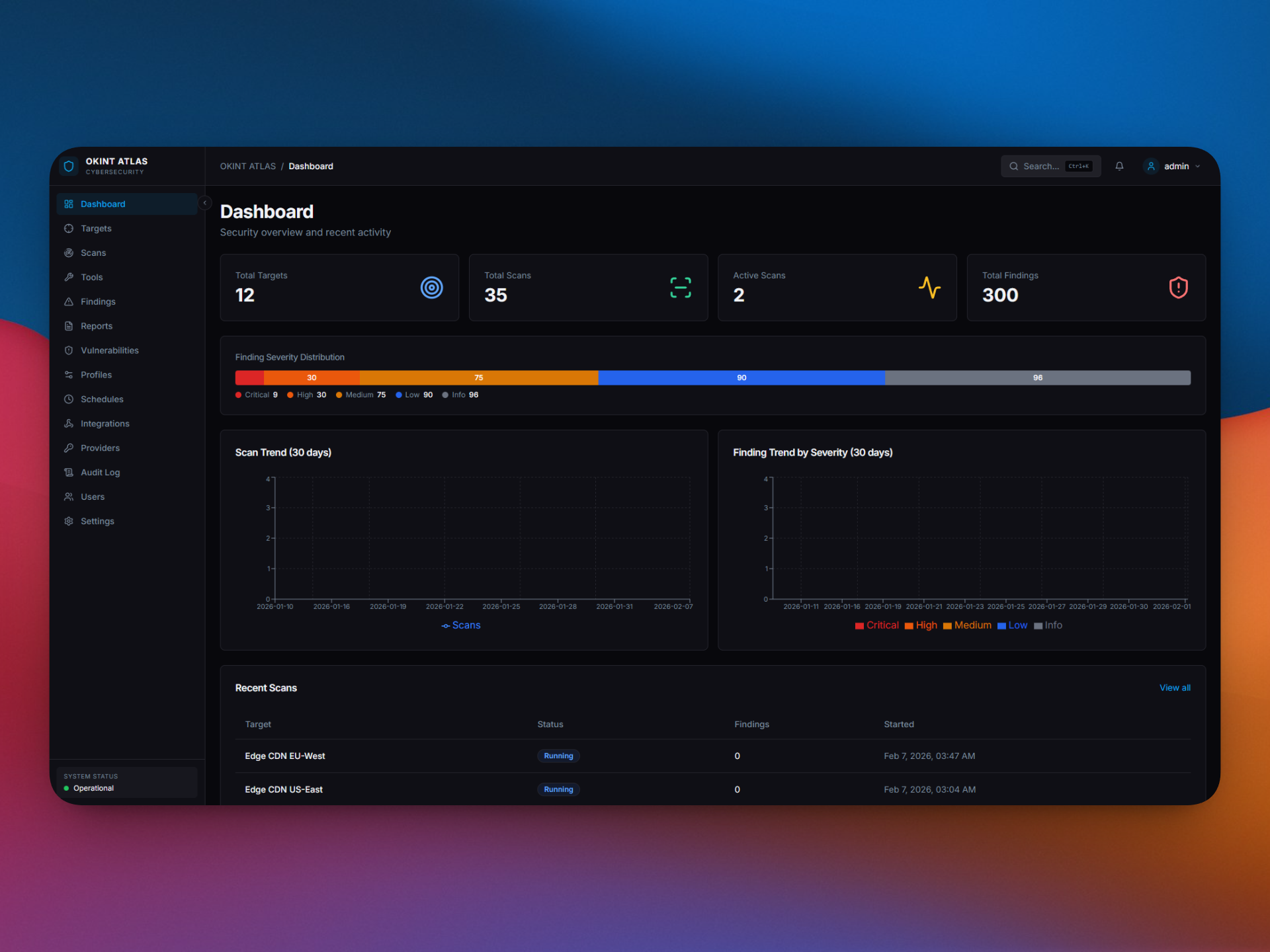
OKINT ATLAS attack surface management dashboard
Back to Case Studies

Cybersecurity · 2026

OKINT ATLAS — Enterprise Attack Surface Management Platform

OKINT ATLAS is an enterprise-grade attack surface management platform engineered for continuous security assessment and vulnerability management. The platform orchestrates 32 specialized scanner modules across six security domains — reconnaissance, network infrastructure, SSL/TLS, web application, API security, and authentication — using a dependency-aware parallel execution engine. Built on 104 reusable security primitives organized in a 5-tier architecture, ATLAS delivers automated, scalable security testing that transforms raw scan data into actionable intelligence. The real-time WebSocket dashboard provides live scan progress, severity distribution analytics, and trend analysis, while the integrated NVD/CVE vulnerability database ensures findings are correlated with known threats. Five specialized report templates serve different stakeholder audiences from technical teams to executive leadership, with export support for SARIF 2.1.0, CSV, and JSON formats for seamless CI/CD and SIEM integration.

PythonFastAPIPostgreSQLNext.jsDockerWebSocketNGINXasyncioVisit Live Site

The Challenge

Modern organizations face an ever-expanding attack surface spanning web applications, APIs, network services, and cloud infrastructure. Existing security tools are fragmented — each covering a narrow domain — forcing security teams to juggle multiple platforms, manually correlate findings, and piece together an incomplete picture of their external exposure. Point solutions lack dependency-aware scanning, meaning reconnaissance data never feeds into deeper vulnerability analysis. Compliance reporting requires manual effort across disparate tools, and the absence of real-time visibility leaves teams reacting to breaches rather than preventing them. Without a unified platform, critical vulnerabilities slip through the gaps between tools.

Our Approach

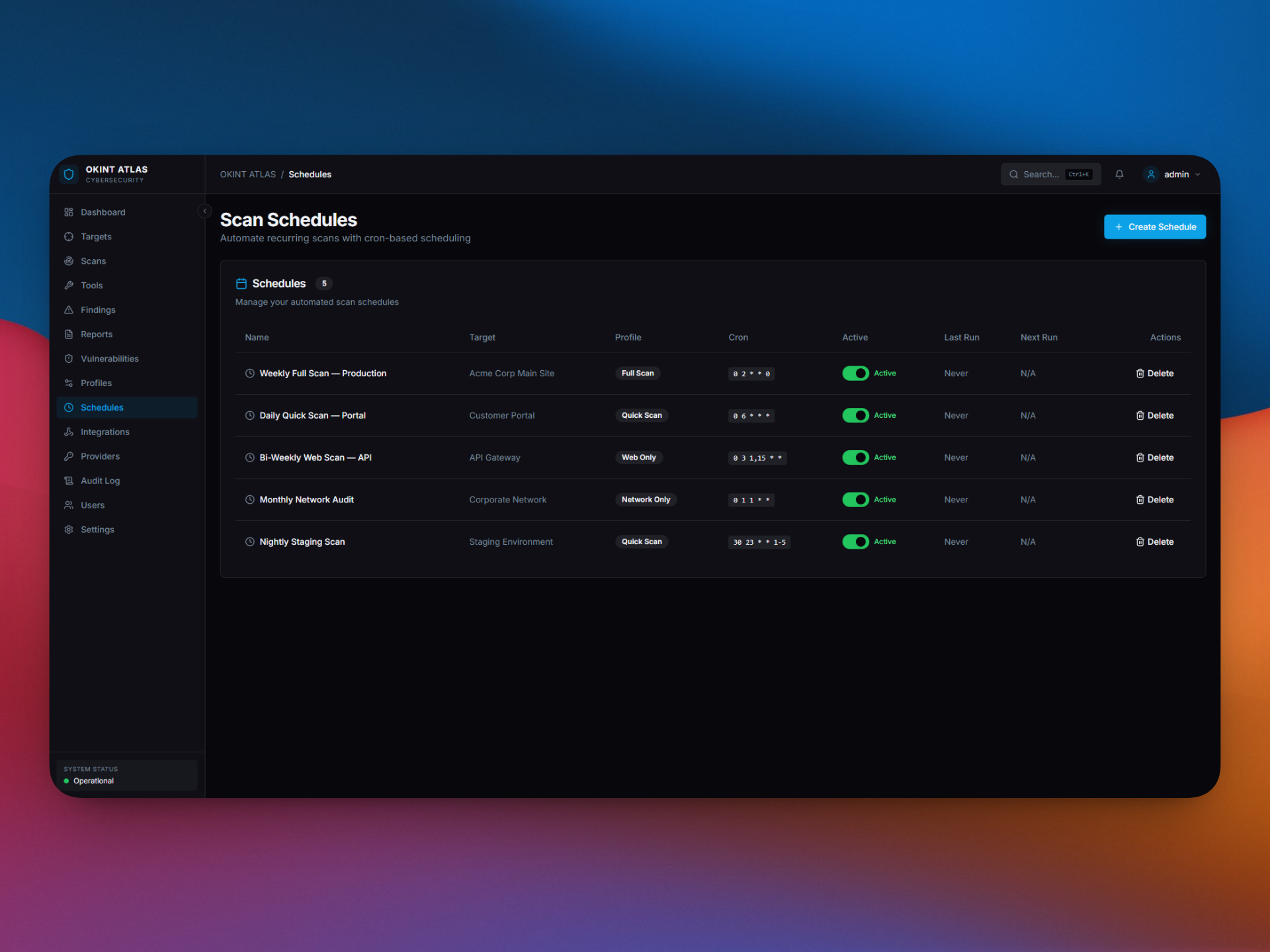
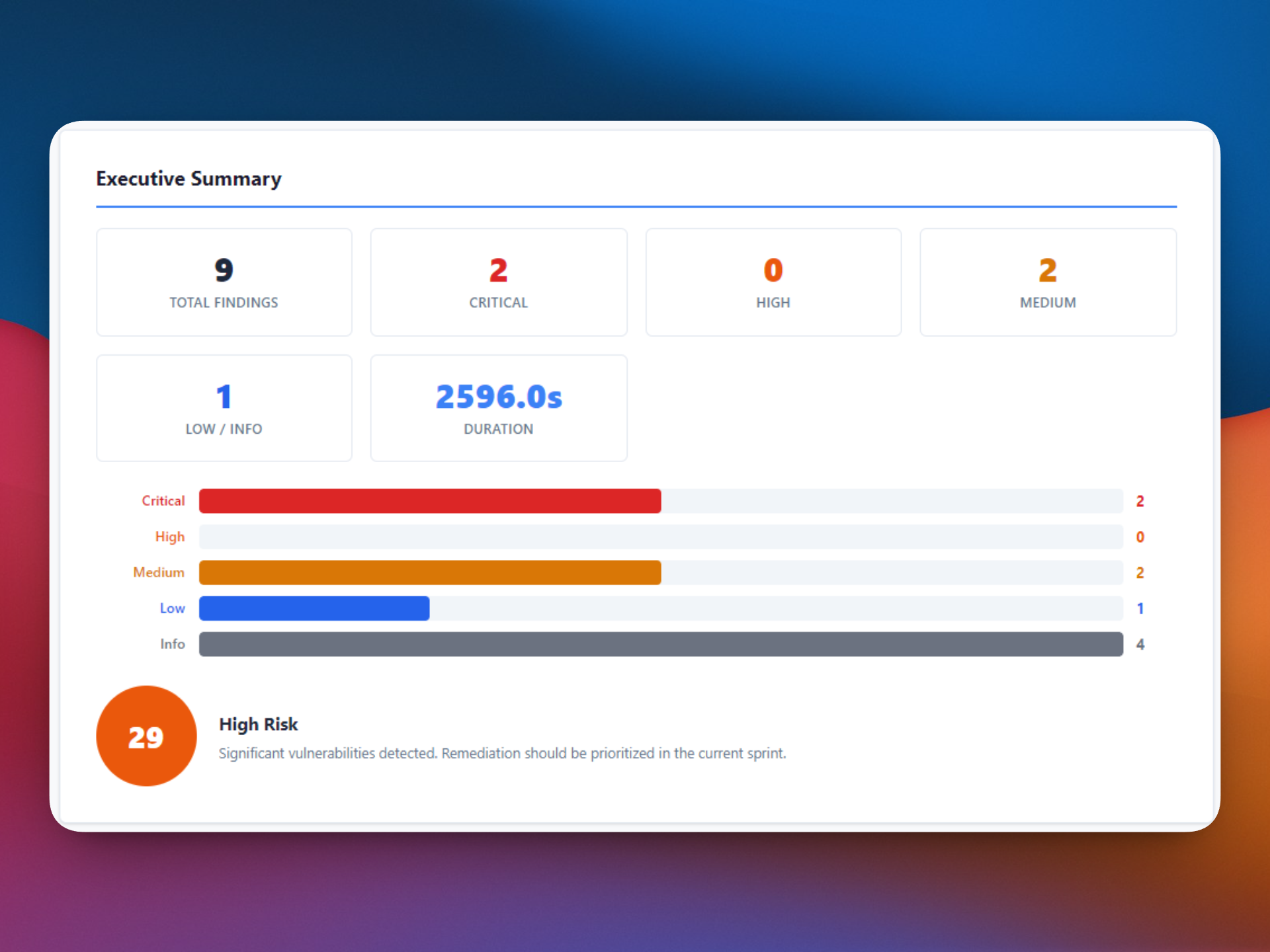
We engineered OKINT ATLAS as a unified attack surface management platform that consolidates the entire security testing lifecycle into a single, orchestrated workflow. The platform's dependency-aware execution engine uses topological sorting to organize 32 scanner modules into optimal phases — reconnaissance modules discover assets first, then feed their findings into network analysis, web application testing, and API security modules automatically. This eliminates the manual correlation burden that plagues fragmented toolsets. A shared ScanContext data bus connects all execution phases, ensuring subdomain discoveries flow into port scans, which feed service detection, which triggers targeted vulnerability testing. Real-time WebSocket connectivity streams live results to an interactive dashboard with severity distribution charts, scan trend analysis, and a global search across all targets and findings. Five purpose-built report templates — from technical findings to executive summaries and PCI-DSS compliance reports — generate automatically with SARIF 2.1.0 export for direct CI/CD integration. The cron-based scheduler enables continuous monitoring with flexible scan profiles, while role-based access control and immutable audit trails ensure enterprise governance requirements are met.

Outcomes

32 scanner modules across 6 security domains with dependency-aware parallel execution
Real-time WebSocket dashboard with live scan tracking and NVD/CVE vulnerability correlation
Automated OWASP Top 10 and PCI-DSS compliance reporting with SARIF 2.1.0 export
Cron-based scheduling with flexible scan profiles and enterprise RBAC with immutable audit trails

Project Gallery

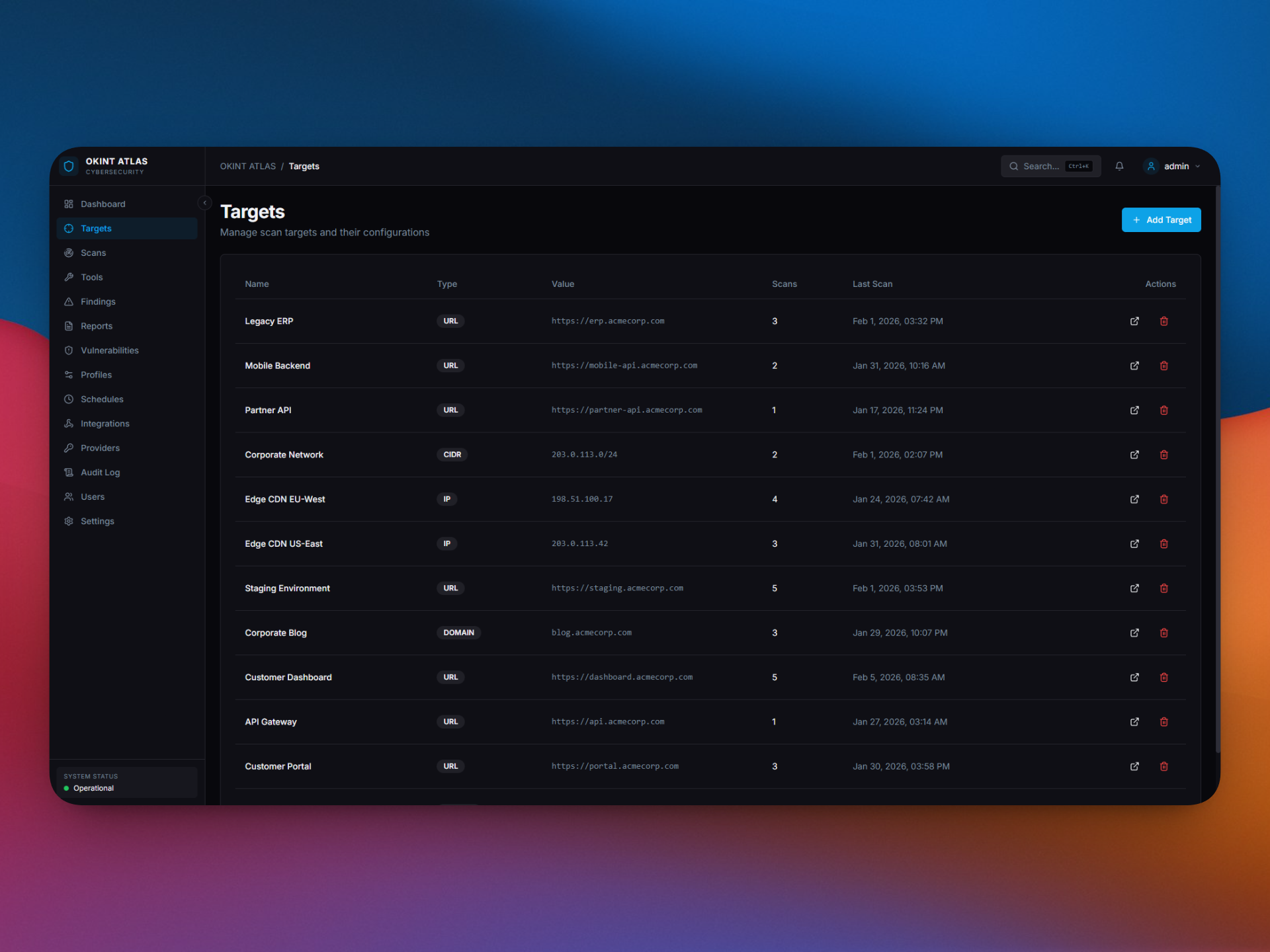
Target inventory management
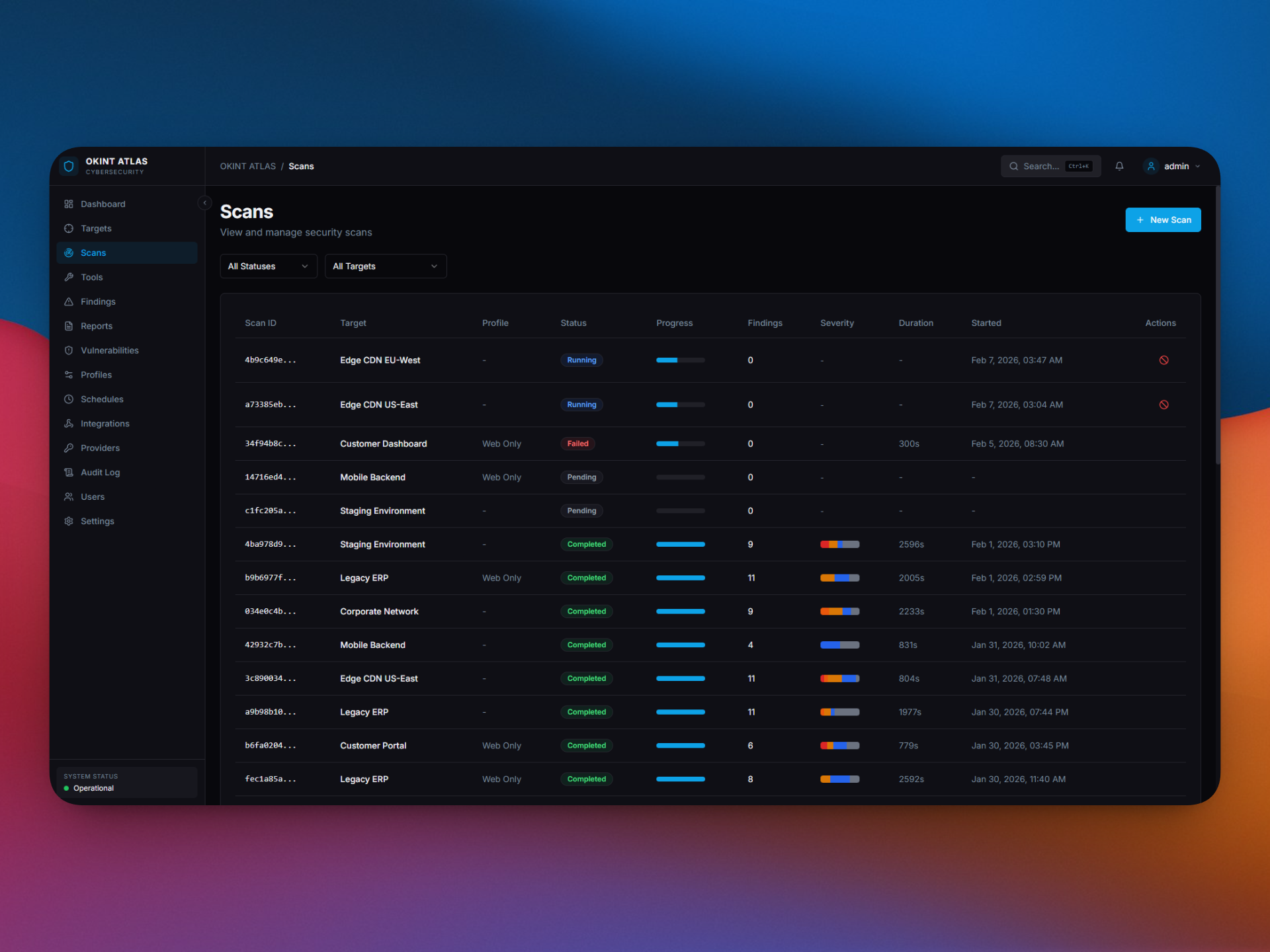
Scan orchestration engine
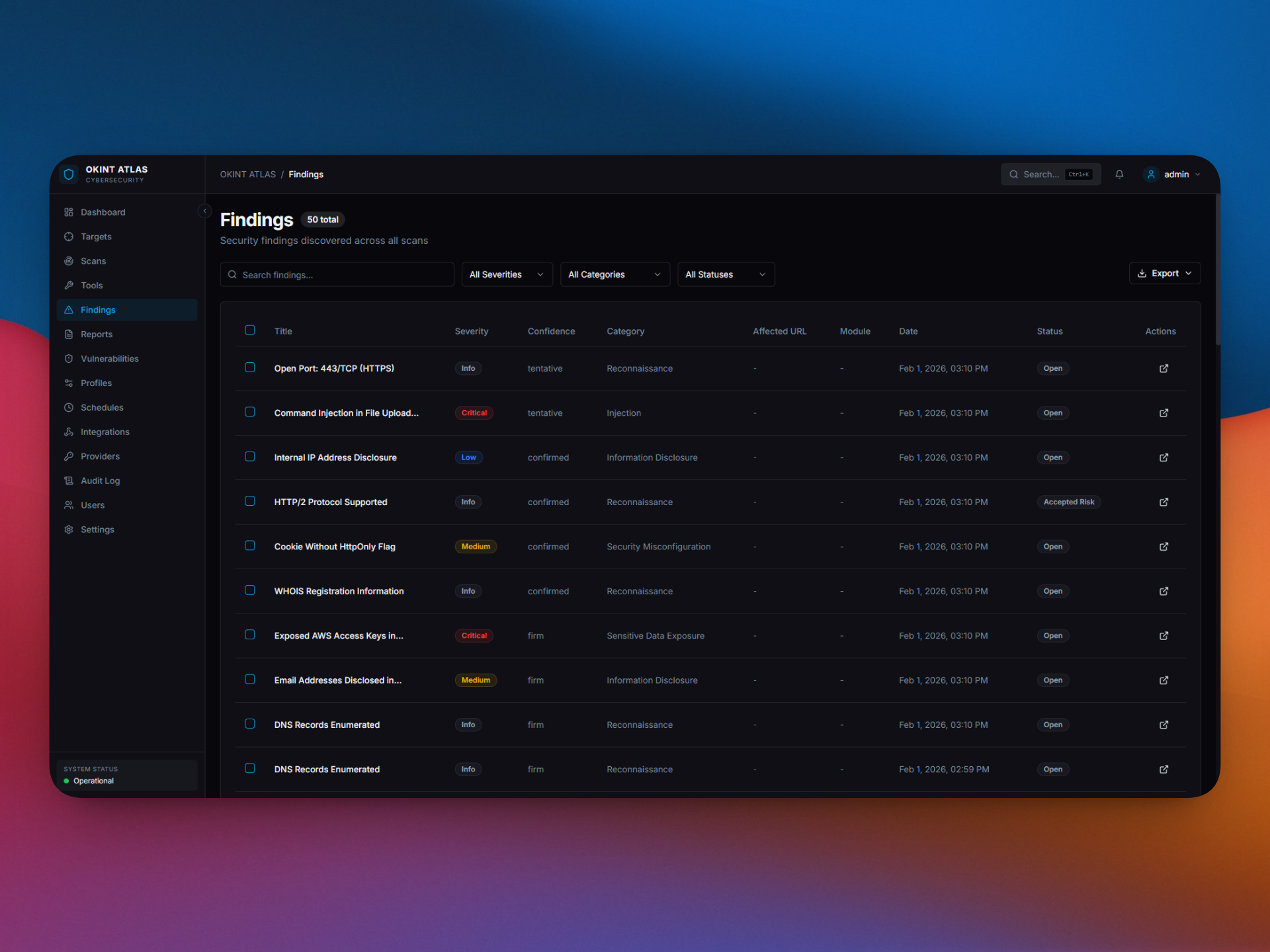
Vulnerability findings management
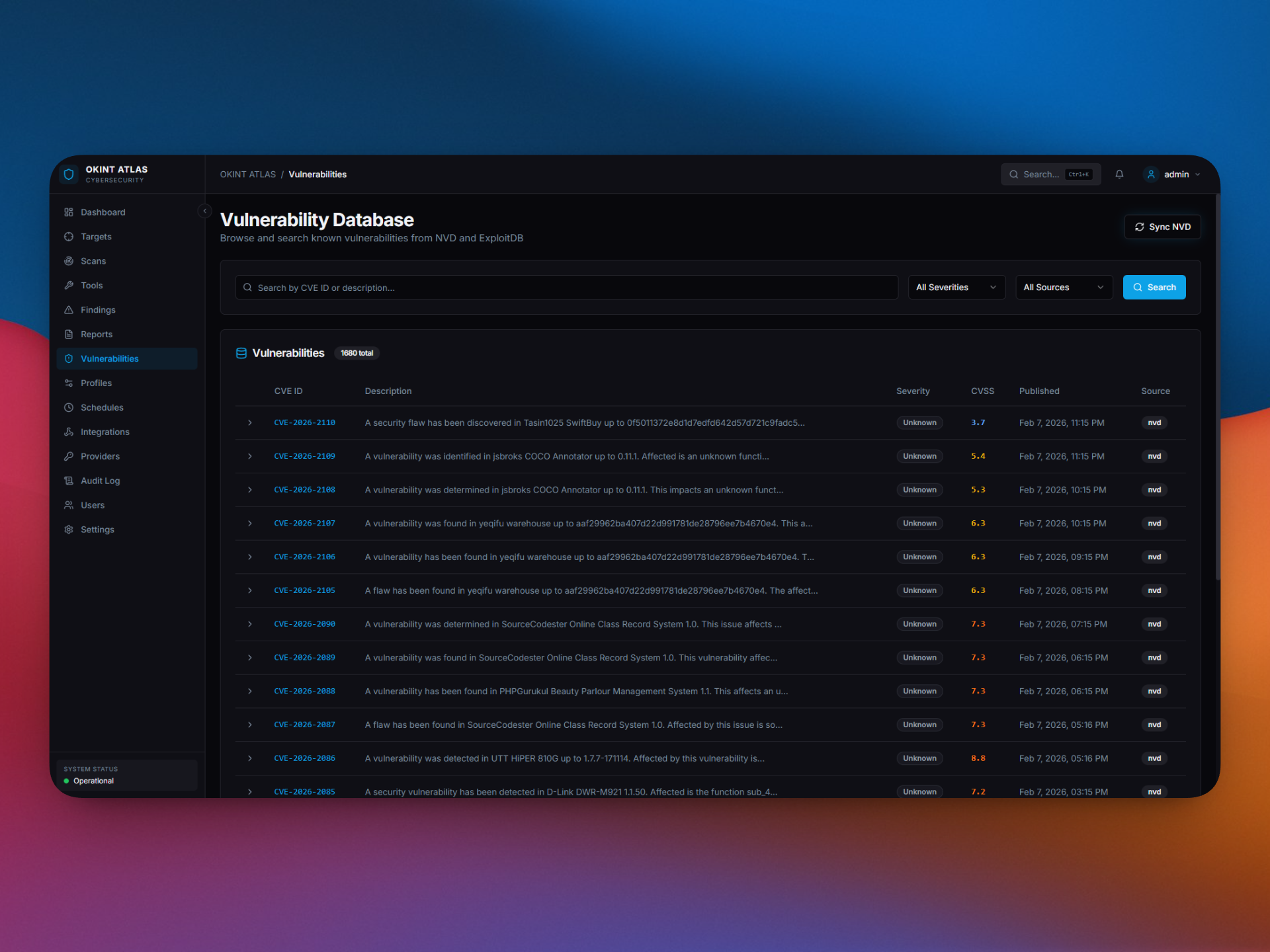
NVD/CVE vulnerability database
Automated scan scheduling
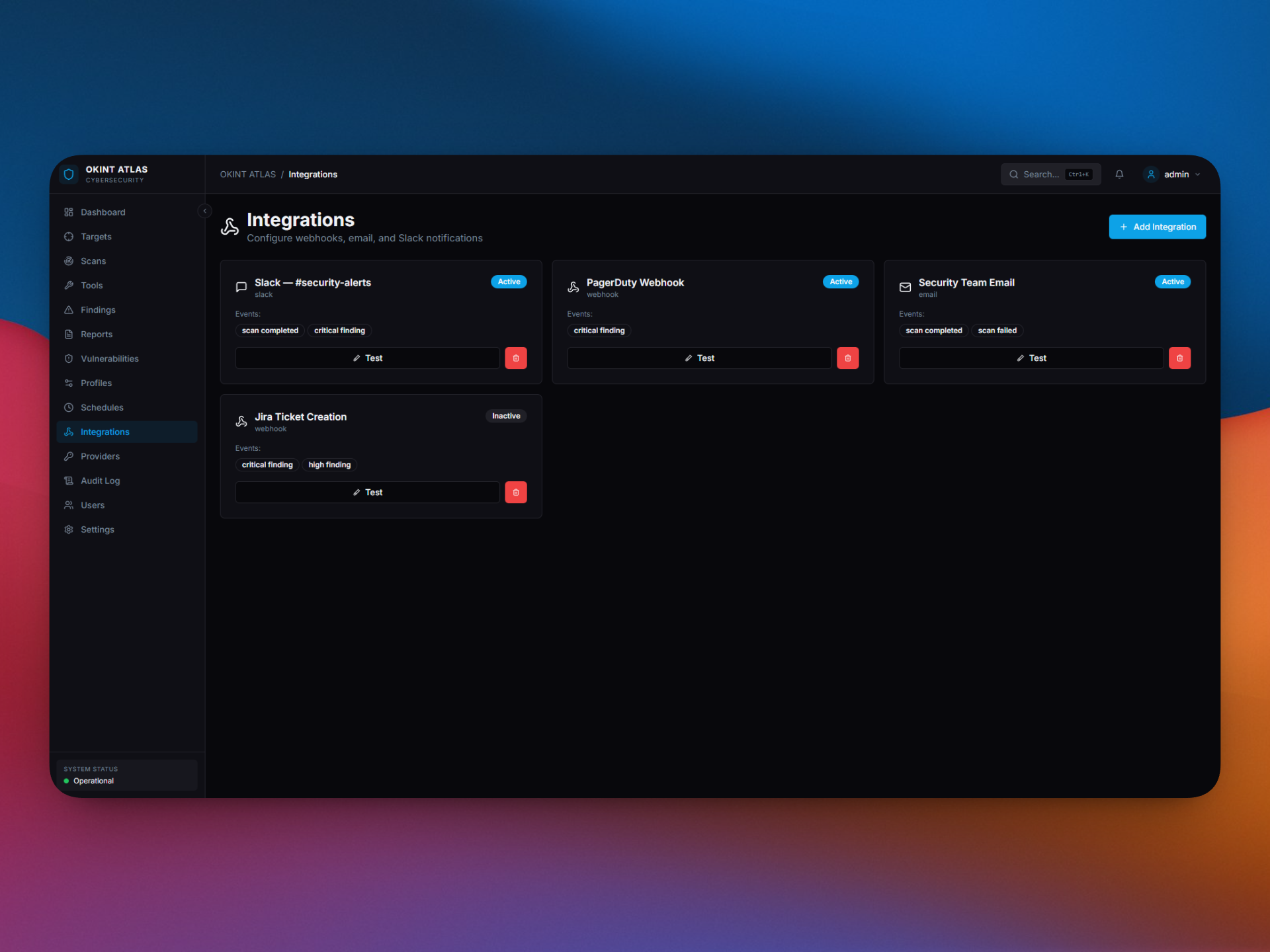
Integration ecosystem
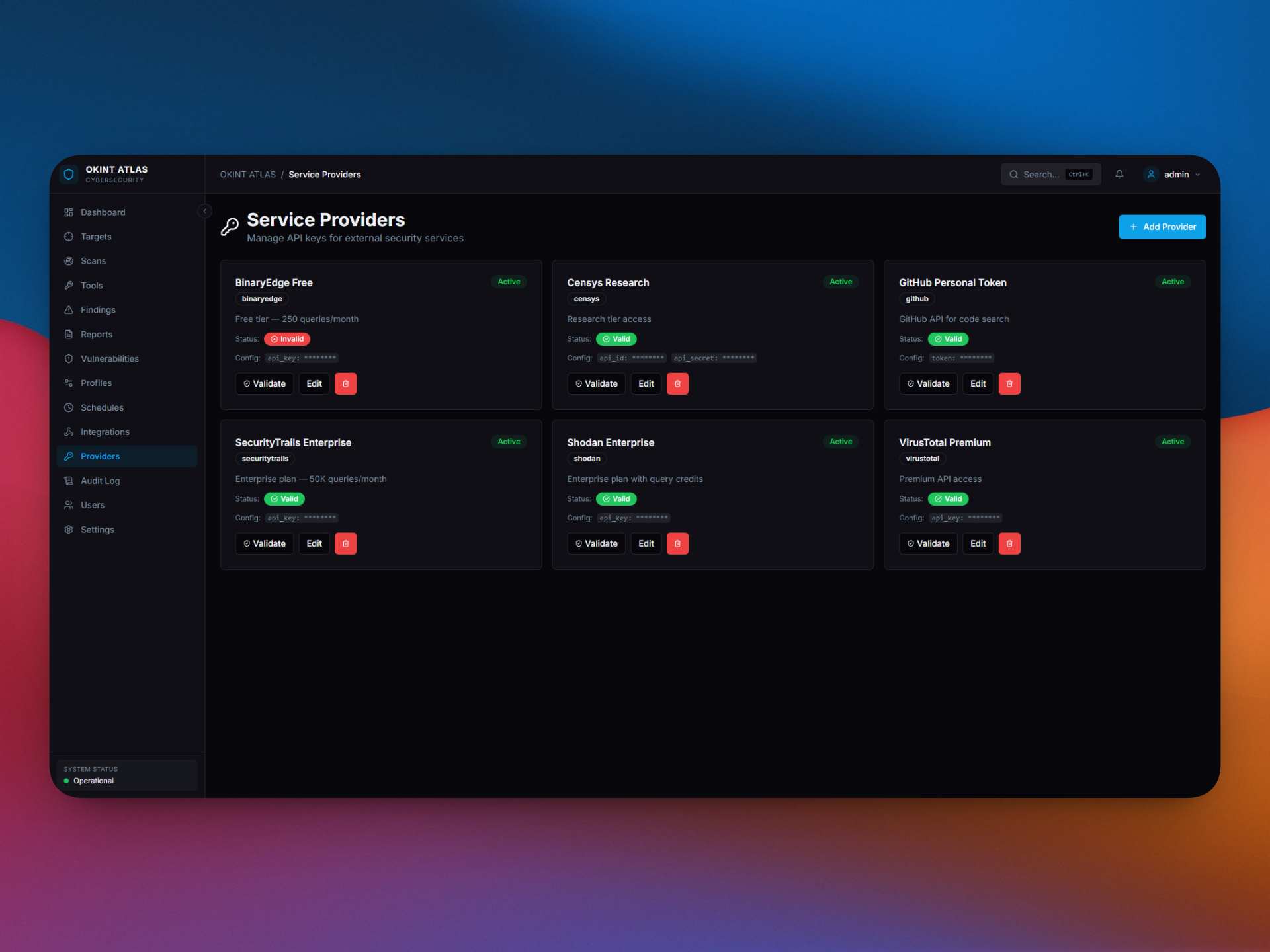
Threat intelligence providers
Compliance reporting system

Interested in a similar solution?

Let’s explore how we can address your specific requirements.

Start a Project